10 Effective Restaurant Growth Strategies for 2026
Looking to grow your restaurant in 2026? Learn 10 proven strategies to boost revenue, improve order accuracy, reduce staff stress, and enhance guest...
Introduction
Running a restaurant in 2026 is very different from just a few years ago. Guest expectations are higher, competition is tougher, and staffing challenges continue to impact daily operations. At the same time, restaurants that adapt and plan smartly are finding new ways to grow without burning out their teams or sacrificing service quality.
Restaurant growth today is no longer just about opening new locations or running constant discounts. It’s about improving efficiency, enhancing the guest experience, and using the right restaurant technology to support long-term success.
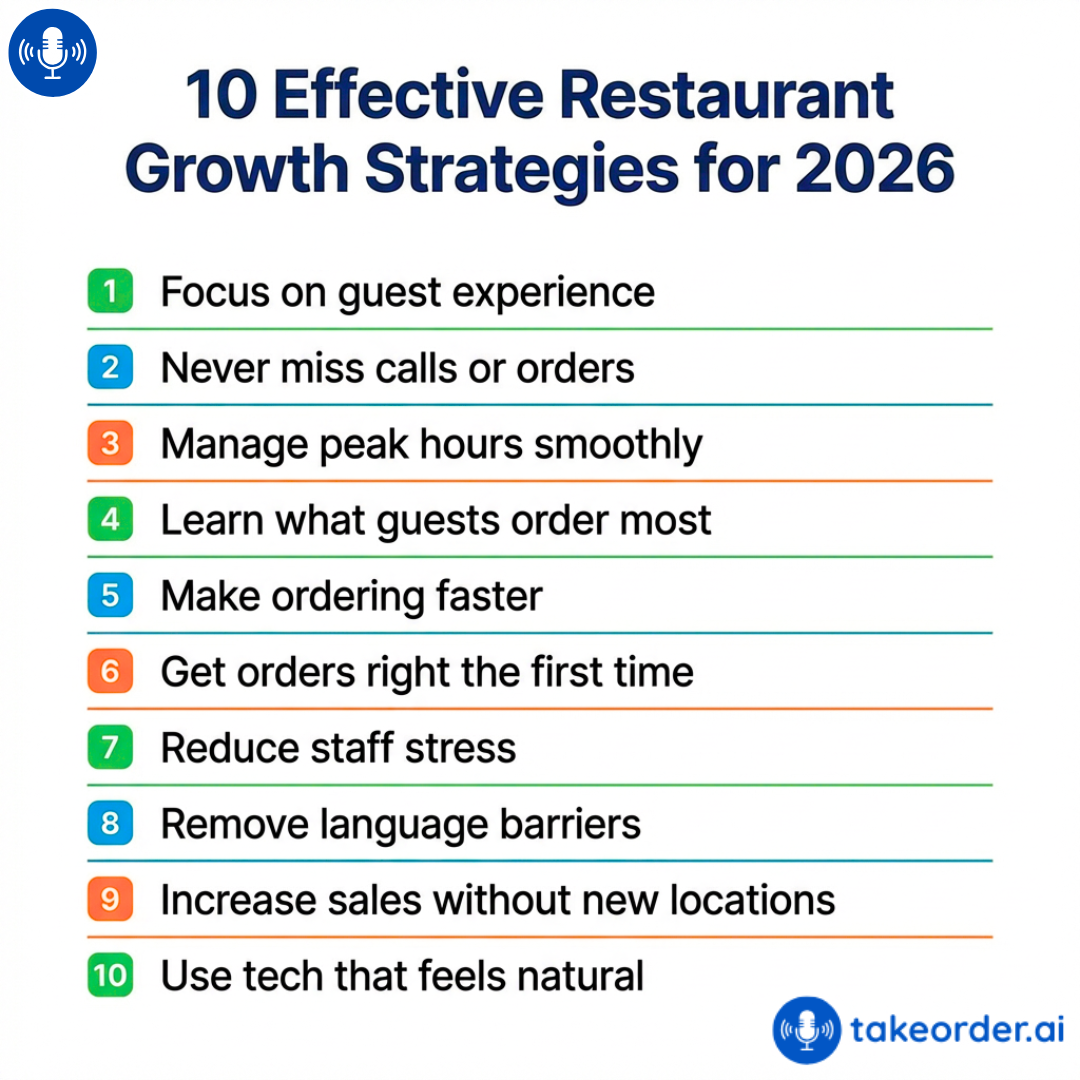
Below are 10 effective restaurant growth strategies for 2026 that help increase sales, reduce missed opportunities, and build a stronger, more reliable business.
1. Focus on Great Guest Experience
Guest experience remains one of the strongest drivers of restaurant growth. When guests feel welcomed, heard, and well-served, they are far more likely to return and recommend your restaurant to others.
Simple improvements can have a big impact:
- Faster responses to calls and inquiries
- Friendly, consistent communication
- Smooth ordering experiences
Positive guest experiences lead to better online reviews, stronger word-of-mouth marketing, and long-term customer loyalty. In 2026, restaurants that prioritize guest satisfaction over short-term promotions are the ones that grow steadily.
2. Never Miss an Order or Call
Missed phone calls are one of the most common and costly problems in restaurant operations. Every unanswered call can mean a lost order, a frustrated guest, or a bad review.
With many guests still preferring phone ordering, especially for takeout and delivery, restaurants must ensure that every call is answered.
Reducing missed calls directly improves:
- Order volume
- Guest trust
- Revenue consistency
Always being available to take orders is no longer a luxury; it’s a requirement for restaurant business growth in 2026.
3. Manage Busy Hours More Smoothly
Peak hours are where restaurants make most of their money, but they’re also where things can go wrong. Long wait times, rushed staff, and order mistakes often happen during busy periods.
Better planning and smoother order flow help restaurants:
- Serve more guests without chaos
- Reduce pressure on staff
- Maintain consistent service quality
Managing busy hours effectively allows restaurants to grow without overwhelming their teams or compromising the guest experience.
4. Learn What Your Guests Order Most
Understanding customer behavior is one of the simplest ways to improve restaurant performance. Knowing which items sell the most, when orders peak, and how guests prefer to order helps restaurants make smarter decisions.
Using basic data insights can help with:
- Menu planning
- Staffing schedules
- Inventory management
Restaurants that rely only on intuition often miss growth opportunities. In 2026, data-driven decision-making is a key restaurant growth strategy.
5. Give Guests Faster Ways to Place Orders
Speed matters more than ever. Guests expect ordering to be quick, simple, and frustration-free. Long hold times or complicated ordering processes often lead to abandoned orders.
Faster ordering experiences help:
- Reduce guest drop-offs
- Increase completed orders
- Improve overall satisfaction
Whether guests are ordering by phone, drive-thru, or kiosk, speed and simplicity directly affect restaurant sales growth.
6. Get Orders Right the First Time
Order accuracy is critical for building trust and loyalty. Wrong orders don’t just cost money; they damage a restaurant’s reputation and guest confidence.
Accurate orders help restaurants:
- Reduce refunds and remakes
- Save time and labor
- Improve guest retention
In a competitive market, guests remember restaurants that consistently get their orders right. Accuracy is a powerful but often overlooked growth factor.
7. Reduce Staff Stress
Staff burnout is a major challenge across the restaurant industry. Overworked teams are more likely to make mistakes, feel disengaged, and leave their jobs.
Reducing staff stress leads to:
- Lower employee turnover
- Better service quality
- More stable daily operations
By removing repetitive tasks and simplifying workflows, restaurants create healthier work environments. Happier staff naturally deliver better guest experiences, which supports long-term growth.
8. Welcome More Guests by Removing Language Barriers
Restaurants serve increasingly diverse communities. Language barriers can lead to misunderstandings, incorrect orders, and uncomfortable guest experiences.
Providing clear and inclusive communication helps:
- Avoid order mistakes
- Make guests feel welcome
- Expand your customer base
Multilingual support is becoming an important growth strategy for restaurants, especially in busy urban and tourist areas.
9. Boost Sales Without Adding New Locations
Growth doesn’t always mean expansion. Many restaurants increase revenue by improving efficiency and handling more orders from their existing location.
Ways to boost sales without expanding include:
- Serving more orders during peak hours
- Reducing missed calls
- Improving order accuracy
By maximizing what you already have, restaurants can grow sustainably without the high costs and risks of opening new locations.
10. Use Technology That Feels Natural
Restaurant technology should make life easier, not more complicated. Guests don’t want to feel like they’re dealing with machines, and staff don’t like systems that slow them down.
The best restaurant technology:
- Works quietly in the background
- Feels natural and human to guests
- Supports staff instead of replacing hospitality
In 2026, technology that blends seamlessly into daily operations gives restaurants a competitive edge.
Final Thoughts: Growing Smarter with Takeorder AI

Restaurant growth in 2026 is built on speed, accuracy, consistency, and great guest experiences. While strategies matter, having the right support system makes executing those strategies much easier.
This is where Takeorder AI fits in naturally.
By helping restaurants:
- Answer every phone call
- Take accurate orders across phone, drive-thru, kiosks, and pizza ordering
- Reduce staff workload during peak hours
Takeorder AI supports restaurant growth without changing how hospitality feels. Instead of replacing human connection, it strengthens operations behind the scenes, helping restaurants grow smarter, serve better, and stay competitive in 2026 and beyond.