Pizza is one of the most customizable items on any restaurant menu. From half-and-half toppings and crust swaps to sauce preferences, cheese levels, allergy notes, and last‑second changes, a single pizza order can contain more variables than an entire table order at another restaurant.
That flexibility is great for guests, but it’s also why pizzerias experience some of the highest order error rates in the industry, especially on phone calls.
This guide breaks down a simple, proven way to handle complex pizza orders by phone and explains why Voice AI is quickly becoming essential for modern pizzerias. You’ll see how a structured order flow improves speed and accuracy, reduces missed calls, and creates a smoother guest experience, using the same principles found in pizza ordering AI solutions like Takeorder AI.
Most pizza order mistakes don’t happen because staff aren’t trained or don’t care. They happen because phone ordering is inherently chaotic, especially during peak hours.
Common challenges include:
When the priority becomes “clear the line,” accuracy suffers. The real fix isn’t asking guests to slow down; it’s enforcing a consistent, structured order flow.
A pizza order becomes complex not because of one request, but because multiple modifiers stack together.
Examples:
Each detail is simple on its own. Errors happen when these details overlap and are captured inconsistently.
Voice AI for restaurants improves pizza ordering because it never improvises. Every call follows the same structured flow, regardless of rush hours, staff fatigue, or background noise.
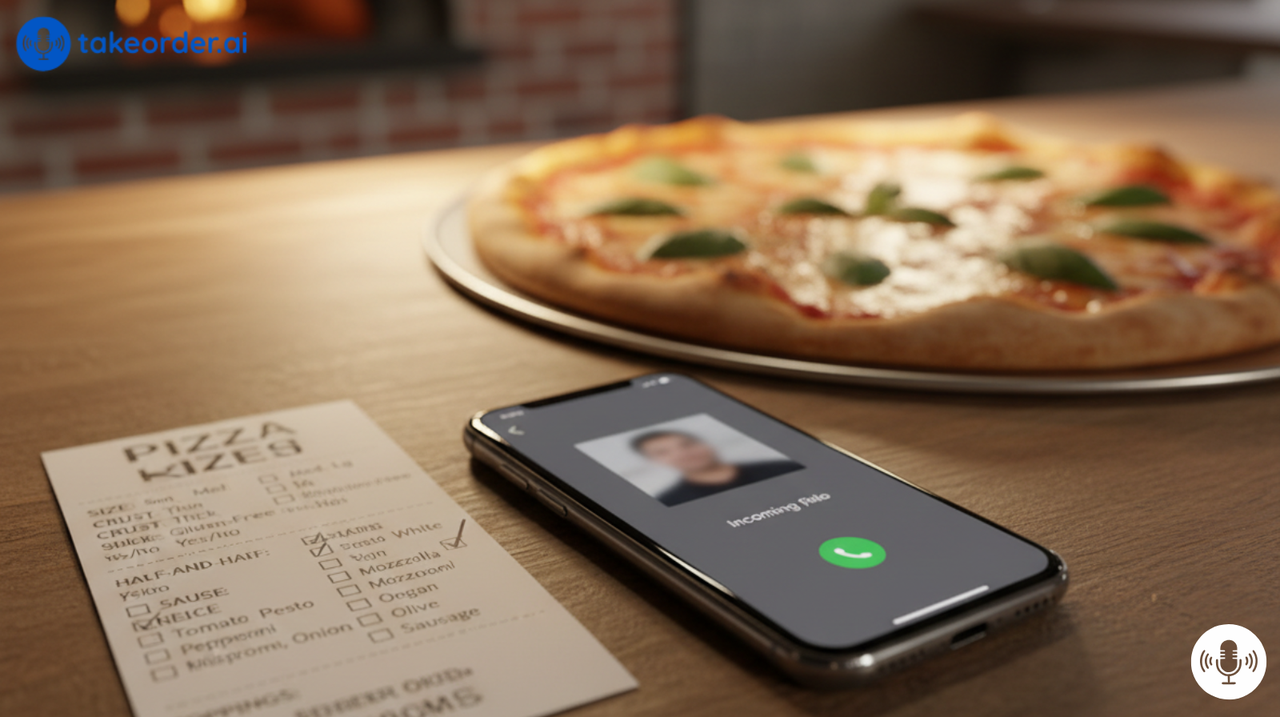
For pizzerias, this structured approach:
The result is restaurant order automation that feels natural and guest‑friendly, without sounding cold or robotic.
Whether you’re training staff or evaluating pizza ordering AI, this sequence consistently prevents mistakes and speeds up calls.
This ladder works because it eliminates backtracking. Guests follow a predictable path, and nothing important gets skipped.
If you want faster, clearer pizza phone ordering, use a guided script that enforces structure without sounding scripted.

This is the same structured flow a restaurant voice assistant like Takeorder AI uses to keep orders fast and accurate.
Half‑and‑half pizzas are responsible for more remakes than almost any other customization. The fix is simple: treat structure as a required step, not an afterthought.
Best practices:
This alone eliminates the classic mistake of toppings intended for one side ending up across the entire pizza.
Modifiers like "extra" and "light" can confuse unless they’re attached to a specific item and section.
Use forced‑choice language:
Then lock the modifier immediately:
This keeps the conversation moving while dramatically improving pizza order accuracy.
Allergy notes often appear at the end of a call, when mistakes are most likely. Make it a dedicated step.
Always repeat these notes during the confirmation. Even a short acknowledgment can prevent remakes, refunds, and unhappy guests.
The best confirmations are short and structured.
Follow this order:
This approach catches mistakes in seconds without turning the call into a long back‑and‑forth.
Even the best staff scripts break down during peak hours. That’s where Voice AI makes the biggest impact.
Takeorder AI helps pizzerias by:
For pizzerias handling high‑volume, modifier‑heavy orders, Voice AI ensures every call follows the same best‑practice process.
Explore pizza‑specific capabilities: https://takeorder.ai/Pizza-AI-Takeorder-Restaurant-AI
Learn about AI phone ordering: https://takeorder.ai/Phone-AI-Takeorder-Restaurant-AI
View all solutions: https://takeorder.ai/solutions-takeorder-restaurant-ai#detailed-solutions
If you want to experience how Voice AI handles half‑and‑half pizzas, crust swaps, sauce and cheese modifiers, and special instructions in a real conversation, request a walkthrough.
Book a demo here: https://takeorder.ai/book-a-demo-takeorder-restaurant-ai
Stay updated on our news and events! Sign up to receive our newsletter.
Thank you for signing up!
Something went wrong. Please try again later.