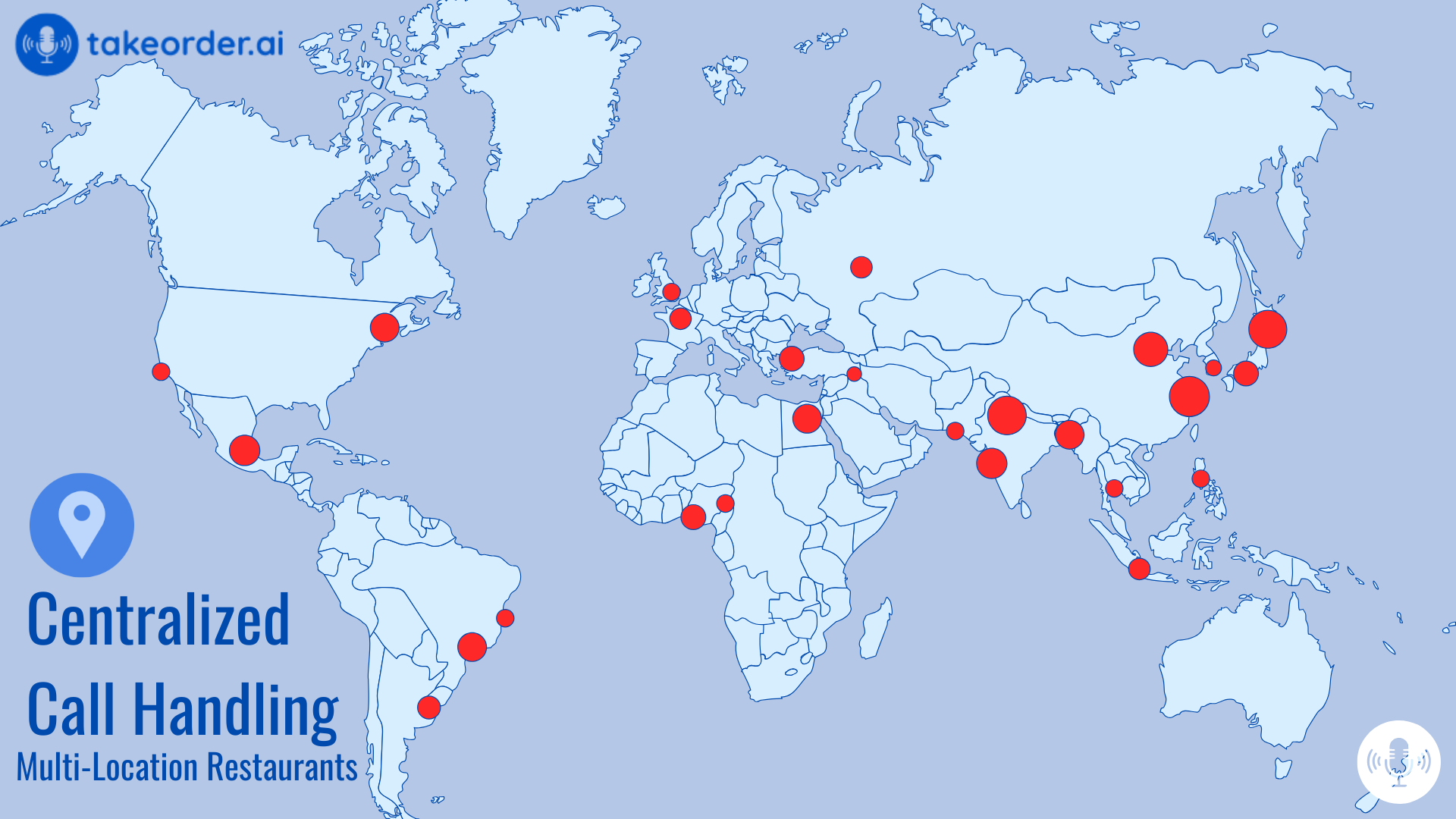
Multi-Location Restaurants: Centralized Call Handling Explained
March 3, 2026 at 7:30 AM
the psychology behind voice ordering why customers prefer talking to kiosks (11).png

Introduction

Scaling from one restaurant to five, ten, or fifty locations is an exciting milestone. But while menus, branding, and marketing often evolve with growth, one operational area usually gets overlooked: phone order management across multiple restaurant locations.

For multi-location restaurants, decentralized call handling can quietly drain revenue, increase order errors, frustrate guests, and overburden staff. In today’s competitive hospitality environment, brands cannot afford missed calls, inconsistent service, or limited visibility into performance metrics.

This is where centralized call handling for multi-location restaurants becomes not just helpful, but essential.

And with restaurant-focused Voice AI solutions like Takeorder AI, centralized phone automation is no longer complex or expensive to implement.

Let’s break it down in detail.

The Hidden Chaos of Managing Phone Orders Across Multiple Locations

When each restaurant location handles its own calls independently, several problems emerge, especially during peak hours.

1. Missed Calls During Rush Periods

In a decentralized setup:

  • One busy branch may miss 20–40 calls on a Friday night.
  • Another branch may be underutilized.
  • Corporate leadership has no unified data on lost revenue.

Missed calls directly translate into lost phone order revenue for multi-unit restaurant chains.

2. Inconsistent Guest Experience Across Branches

When different staff members answer calls:

  • Greeting style varies.
  • Upselling opportunities are inconsistent.
  • Order-taking accuracy depends on individual training.

This creates a fragmented brand experience, especially harmful for franchise restaurant phone management systems.

3. Limited Visibility Into Call Performance Metrics

Without centralized reporting:

  • You cannot track total incoming calls per location.
  • You cannot measure average call handling time in restaurants.
  • You cannot identify which stores struggle with peak-hour phone traffic.

For growing restaurant brands, the lack of centralized restaurant call analytics dashboard access becomes a strategic blind spot.

What Is Centralized Call Handling for Restaurants?

Centralized call handling is a system where incoming calls for all restaurant locations are managed through a unified platform rather than individual store phones.

Instead of each branch operating independently, calls are:

  • Automatically routed
  • Answered instantly
  • Processed using consistent scripts
  • Logged into a centralized reporting dashboard
  • Synced directly with the appropriate location’s POS system

In modern setups, centralized systems often use AI-powered phone ordering solutions for multi-location restaurants to ensure:

  • 24/7 availability
  • Zero hold times
  • Consistent upselling logic
  • Multilingual restaurant phone ordering support
  • Real-time performance tracking

How Centralized Call Handling Works (Step-by-Step)

Here’s how a centralized AI call management system for restaurant groups typically operates:

Step 1: Customer Calls a Location or Brand Number

The system automatically identifies:

  • The intended branch
  • Caller location
  • Previous order history (if available)

Step 2: AI Answers Instantly

Instead of hold music, guests experience:

  • Natural-sounding voice interaction
  • Immediate menu guidance
  • Order customization support

Step 3: Intelligent Routing to Correct Store

The system ensures:

  • Orders are sent to the correct kitchen
  • Pickup times align with location capacity
  • No manual transfer required

Step 4: POS Integration

Orders flow directly into the restaurant’s existing POS system.

This eliminates:

  • Manual re-entry errors
  • Miscommunication
  • Delays in the kitchen workflow

Step 5: Data Is Logged in a Central Dashboard

Leadership gains access to:

  • Total calls answered across all locations
  • Average order value per branch
  • Upsell performance data
  • Missed call reduction metrics

This is where solutions like Takeorder AI stand out, by offering centralized reporting tools for multi-unit restaurant operators alongside seamless POS integration.

The Role of Voice AI in Multi-Location Centralization

Traditional call centers are expensive and difficult to manage. Voice AI changes the equation.

Modern restaurant-focused AI can:

Solutions such as Takeorder AI specialize in AI-powered centralized phone ordering for restaurant chains, rather than generic automation tools.

This restaurant-specific focus matters.

Benefits of Centralized Call Handling for Restaurant Groups

From an operational perspective, centralized systems improve:

  • Restaurant phone order accuracy improvement
  • Reduction in missed calls during peak hours
  • Faster call handling times for QSR chains
  • Increased average order value through AI upselling
  • Enhanced guest satisfaction from zero hold times
  • Data-driven decision making across multiple locations

For brands focused on restaurant revenue growth through phone automation, centralized AI becomes a strategic asset rather than just a technical upgrade.

Is Centralized Call Handling Right for Your Restaurant Group?

It is particularly valuable for:

  • Franchise restaurant networks
  • Regional multi-unit restaurant brands
  • High-volume pizzerias
  • Fast food and QSR chains
  • Ghost kitchen networks
  • Rapidly expanding restaurant startups

If your brand operates three or more locations and struggles with:

  • Inconsistent phone performance
  • Missed calls during busy hours
  • Lack of call data transparency
  • Staff overload

Then, centralized AI-powered call handling is likely the next logical operational step.

Growth Requires Operational Consistency

Scaling locations without scaling communication systems creates operational friction.

Multi-location restaurants that continue relying on decentralized phone systems risk:

  • Revenue leakage
  • Brand inconsistency
  • Staff burnout
  • Limited performance visibility

Centralized call handling, especially through restaurant-specific Voice AI platforms, solves these challenges by unifying:

  • Revenue capture
  • Guest experience
  • Data insights
  • Operational scalability

With solutions like Takeorder AI, multi-unit operators can modernize their phone infrastructure without disrupting existing workflows.

For brands serious about sustainable expansion, centralized phone automation isn’t just an upgrade; it’s a growth enabler.

If you’re exploring how to streamline operations across all your branches, consider taking the next step and book a demo to see how centralized call handling can transform your multi-location restaurant performance.

Trustpilot
We Like Tools Acid Tools AI Tech Viral AIGC 160 SaaS Hub Directory Product Wing AI Toolz Appa List Beam Tools Appsy Tools Ash list Best Tool Vault Hunt for Tools My Launch Stash My Start Tools Launch Scroll Latest AI Updates Power Up Tools Product List Dir SaaS Field SaaS Roots SaaS Tools Dir Solver Tools Stack Directory Startup AIdeas Smart Kit Hub Source Dir SaaS Wheel Software Bolt The Mega Tools Tool Find Dir The App Tools Tool Cosmos The Key Tools The Core Tools Super AI Boom That App Show Startup Vessel Startup Benchmarks Unite List Tool Journey Good AI Tools Trustiner Toshi List Top Trend Tools Tools Under Radar Tools List HQ Tool Signal Tool Prism Listed on Ask AI For IT AIMonstr Tool Pilot