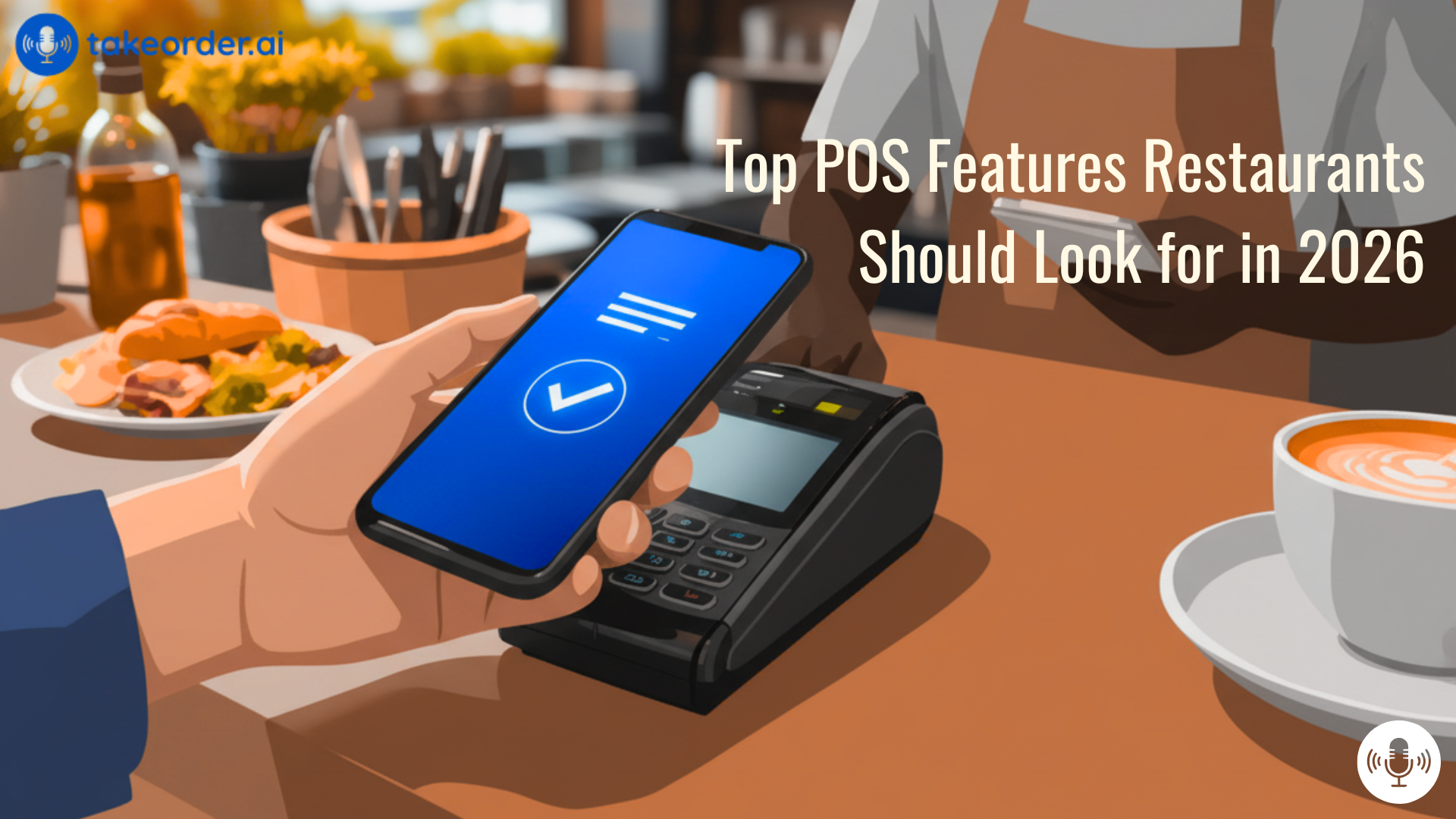
Restaurant technology has evolved dramatically in the past decade. What once started as simple cash registers has now transformed into powerful restaurant POS systems that manage orders, payments, inventory, analytics, and customer interactions.
In 2026, the role of a POS system goes far beyond processing payments; it has become the central hub of restaurant operations.
Modern restaurants operate across multiple channels, including dine-in service, phone orders, online ordering platforms, delivery apps, and self-service kiosks.
Managing these different channels efficiently requires a POS system that can integrate with modern restaurant technologies and automate workflows. For restaurant owners, choosing the right POS system can directly impact operational efficiency, order accuracy, staff productivity, and customer experience.
A modern POS solution should provide flexibility, real-time insights, and seamless integrations with tools such as Voice AI ordering systems like Takeorder AI.
Platforms like Takeorder AI help restaurants automate phone ordering and connect those orders directly to the POS system, eliminating manual order entry and reducing missed calls. If you want to explore how AI can integrate with restaurant operations, you can learn more about the complete solutions offered by Takeorder AI here: https://takeorder.ai.
In this guide, we will explore the top POS features restaurants should look for in 2026 to stay competitive in an increasingly digital dining environment.
Restaurants today face multiple operational challenges. Staff shortages, high order volumes, and increasing customer expectations make efficiency more important than ever. Traditional POS systems were designed only to handle billing and basic order management.
However, modern restaurants require advanced POS systems that integrate with multiple ordering channels and automate operations.
An advanced POS system allows restaurants to:
By connecting different restaurant technologies into one system, POS integrations reduce operational complexity and improve order management. When combined with AI ordering tools like Phone AI, restaurants can automate phone calls and automatically send orders into the POS system.
Learn more about this solution here: https://takeorder.ai/Phone-AI-Takeorder-Restaurant-AI
This type of automation ensures that restaurants can capture every order and improve operational efficiency, especially during busy hours.
One of the most important features restaurants should look for in 2026 is a cloud-based POS system. Unlike traditional systems that store data locally, cloud POS platforms store information securely online. Cloud technology provides restaurant owners with real-time access to business data from anywhere.
Benefits of cloud-based POS systems include:
For restaurant chains or multi-location businesses, cloud POS systems are essential because they allow managers to monitor performance across different locations without being physically present.
Cloud technology also makes it easier to integrate with restaurant automation tools, analytics dashboards, and AI ordering systems, helping restaurants scale their operations efficiently.
Modern restaurants receive orders from multiple sources, including:
Without proper integration, restaurant staff often need to manually enter orders into the POS system, which increases the chances of mistakes and slows down service. A POS system with strong integration capabilities allows restaurants to connect all ordering channels into one centralized platform.
Key benefits of POS integration include:
For example, AI phone ordering systems such as Takeorder AI Phone AI automatically take customer calls and send the order directly to the POS system.
This automation helps restaurants:
You can explore how this works here: https://takeorder.ai/Phone-AI-Takeorder-Restaurant-AI
POS integration is one of the most critical features restaurants should prioritize when selecting a system for the future.
Another essential POS feature for 2026 is the Kitchen Display System (KDS). Instead of relying on printed order tickets, KDS uses digital screens to display incoming orders in the kitchen. This system improves communication between front-of-house staff and kitchen teams.
Advantages of Kitchen Display Systems include:
In fast-paced restaurants, especially quick service restaurants (QSRs) and pizzerias, KDS technology helps streamline operations and reduce errors. When integrated with POS systems and automated ordering tools like Pizza AI, orders can flow seamlessly from customer to kitchen.
Learn more about Pizza AI here: https://takeorder.ai/Pizza-AI-Takeorder-Restaurant-AI
This level of automation ensures that kitchens receive accurate orders instantly, helping restaurants serve customers faster.
Inventory management is another area where modern POS systems provide significant value. Restaurants often struggle with inventory tracking because ingredients are used in different menu items. A POS system with real-time inventory management automatically deducts ingredients whenever an order is placed.
Key inventory features include:
These features help restaurants maintain optimal stock levels and reduce food waste.
For example, if a particular ingredient runs out, the POS system can immediately notify staff and update menu availability. This prevents restaurants from accepting orders for items that are no longer available. Efficient inventory management also helps restaurants improve profit margins and cost control.
Customer expectations have changed significantly in recent years. Today’s diners expect fast, secure, and contactless payment options. Modern POS systems should support a wide range of payment methods.
Common payment features include:
Providing flexible payment options allows restaurants to improve the checkout experience and reduce wait times. Faster payments also increase table turnover in dine-in restaurants, helping businesses serve more customers during peak hours.
Data plays an increasingly important role in restaurant management. Modern POS systems provide powerful analytics and reporting tools that help restaurant owners make informed decisions.
With advanced analytics, restaurants can track:
These insights allow restaurant managers to optimize menus, adjust staffing schedules, and plan promotions effectively.
For example, if data shows that certain menu items sell more during specific times of the day, restaurants can create targeted promotions to increase sales. Analytics tools also help restaurants identify growth opportunities and operational inefficiencies.
Customer loyalty is critical for long-term restaurant success. Many modern POS systems include Customer Relationship Management (CRM) tools that track guest preferences and purchase history.
CRM features allow restaurants to:
By understanding customer behavior, restaurants can create personalized dining experiences that encourage repeat visits. A POS system with CRM capabilities helps businesses build stronger relationships with their customers.
Mobile POS devices are becoming increasingly popular in restaurants. Handheld devices allow staff to take orders directly at the table and send them instantly to the kitchen.
Advantages of mobile POS systems include:
Mobile POS technology is particularly useful for large restaurants, busy cafés, and outdoor dining spaces. Staff can process orders and payments without needing to return to a central terminal, improving overall efficiency.
One of the most exciting developments in restaurant technology is the integration of Voice AI ordering systems with POS platforms. Restaurants receive many phone calls for takeout and delivery orders. However, during busy hours, staff may not always be able to answer every call.
Voice AI solutions such as Takeorder AI can automatically answer phone calls, take customer orders, and send them directly to the POS system.
This integration provides several benefits:
AI solutions can also support different ordering environments, such as Drive-Thru AI and Kiosk AI, helping restaurants automate multiple customer interactions.
Explore these solutions here:
Drive-Thru AI - https://takeorder.ai/Drive-Thru-AI-Takeorder-Restaurant-AI
Kiosk AI - https://takeorder.ai/Kiosk-AI-Takeorder-Restaurant-AI
By integrating Voice AI with POS systems, restaurants can create a fully automated ordering workflow from customer interaction to kitchen preparation.
The restaurant industry is becoming increasingly technology-driven. In 2026 and beyond, POS systems will continue to evolve into complete restaurant management platforms that connect every aspect of operations.
Modern POS systems now integrate payments, inventory management, customer data, analytics, and ordering automation in one ecosystem. When combined with innovative solutions like Takeorder AI, restaurants can automate phone orders, improve efficiency, and enhance the overall customer experience.
Restaurants that adopt these technologies early will gain a significant advantage by improving operational efficiency, reducing errors, and delivering faster service to their customers. If you want to see how AI-powered ordering can integrate seamlessly with your restaurant’s POS system, you can book a demo with Takeorder AI here: https://takeorder.ai/book-a-demo-takeorder-restaurant-ai
The future of restaurant operations is connected, automated, and data-driven, and the right POS system will play a central role in making that future possible.
Stay updated on our news and events! Sign up to receive our newsletter.
Thank you for signing up!
Something went wrong. Please try again later.